Tips on Taking Capsule Pills

Some people often have difficulty swallowing when we take capsules. They always feel sticky on the esophagus when capsule swallowed into the throat. It is unpleasant and even suffocating. This is caused by a certain viscosity of the mucosa because the capsule shell is made of gelatin and other ingredients. So how can you easily eat capsules more conveniently?

First you need to overcome psychological barriers. Strengthen the idea that taking capsules will not get into the trachea or cause suffocation. In fact, sometimes the capsule has been swallowed, but the psychology of the user giving you a feeling of disgust and uncomfortable.

Second, you need to pay attention to the posture of taking the capsule. It is best not to swallow with your head raised, because the density of the capsule is smaller than that of water (there is mostly air inside, and the density of the capsule shell is also very small). When it is soaked in water, it will dissolve a part. At this time, it will be very sticky and will stick to the esophagus. If the capsule is really stuck in the esophagus, swallow a lot of water to flush it into the stomach. When taking capsules, it is best to use a bowed posture. When the capsule is suspended in the soft palate, the water is swallowed and the capsule is naturally carried along with the water.

When taking capsule pills, it can be served with cold water and warm water. One thing that should be noted more than the water temperature is the amount of water. Many people take only a sip of water when they take medicine or even swallow without water. This makes it possible to stick to the esophagus. In fact, you should drink more water to ensure that the drug reaches the stomach smoothly, and it can also reduce the stimulation of certain drugs on the esophagus.

Source: www.capsulcn.com

How to Fill Capsules With Powder by Capsule Filling Machine

Metal Capsule Filling Machine Step 1
https://www.capsulcn.com/metal-capsule-filling-machine-operating-procedure

STEP-1

Pour 50+ capsules onto loader. Shake back and forth moving capsules into the holes, lift gate and pour off excess capsules.

Metal Capsule Filling Machine Step 2

STEP-2

Open filler locking clamp forward, place loader locating feet in the holes on the filler marke.

Metal Capsule Filling Machine Step 3

STEP-3

After filling the empty capsules, put the cap sheet on the capsules , make sure all the capsules are fixed firmly.

Metal Capsule Filling Machine Step 4

STEP-4


Close the cover and push the clip in to lock the cover, lock the body sheet by swinging the lever under it outwards.

Metal Capsule Filling Machine Step 5

STEP-5

Take the collector by both handles and lift it off. Put it to one side.

Metal Capsule Filling Machine Step 6

STEP-6

Fix the powder guard to the body plate using the steel pegs as guides. Pour the powder and use the spreader to fill the capsules (The powder tray sh¬ould be to the right.)

Metal Capsule Filling Machine Step 7

STEP-7

If the capsules are not full, take out the tamping tool and compress the powder.

Metal Capsule Filling Machine Step 8

STEP-8

Take the collector and. use the stainless steel pegs as guides. and ifx it to the body plate.

Metal Capsule Filling Machine Step 9

STEP-9

Place your thumbs on either side of the cover. Hold the lifting plate(at the very bottom) with your remaining fingers and pull it up and down until you feel the capsules are locked.

Ways to identify plant capsules and gelatin capsules:

At present, the capsule products on the market are mainly gelatin. However, the unique structural characteristics of gelatin molecules make them have obvious defects in their applications. For example, it is easy to cross-link with drugs containing aldehydes, reducing sugar-based compounds and vitamin C, so that the gelatin shell is degraded in water solubility, resulting in disintegration of the hollow capsules and delay in dissolution of the capsule contents. Therefore, plant capsules have begun to receive widespread attention.

Vegetarian capsules are hollow glues made from plant cellulosic materials. The plant capsule retains the advantages of traditional gelatin capsules: it is convenient to take, effectively masks the taste and smell, and the contents are transparent and visible. Moreover, compared with gelatin capsules, plant capsules have a tight molecular structure, strong sealing, effectively avoiding the oxidation reaction of the drug in contact with air. Plant capsules are all made of botanical ingredients, which are harmless to the body and have nutrients. They are also effective for diabetes and high blood pressure. As a new technology, the production of plant capsules uses internationally accepted standards. Here are two easy ways to distinguish between plant capsules and gelatin capsules:

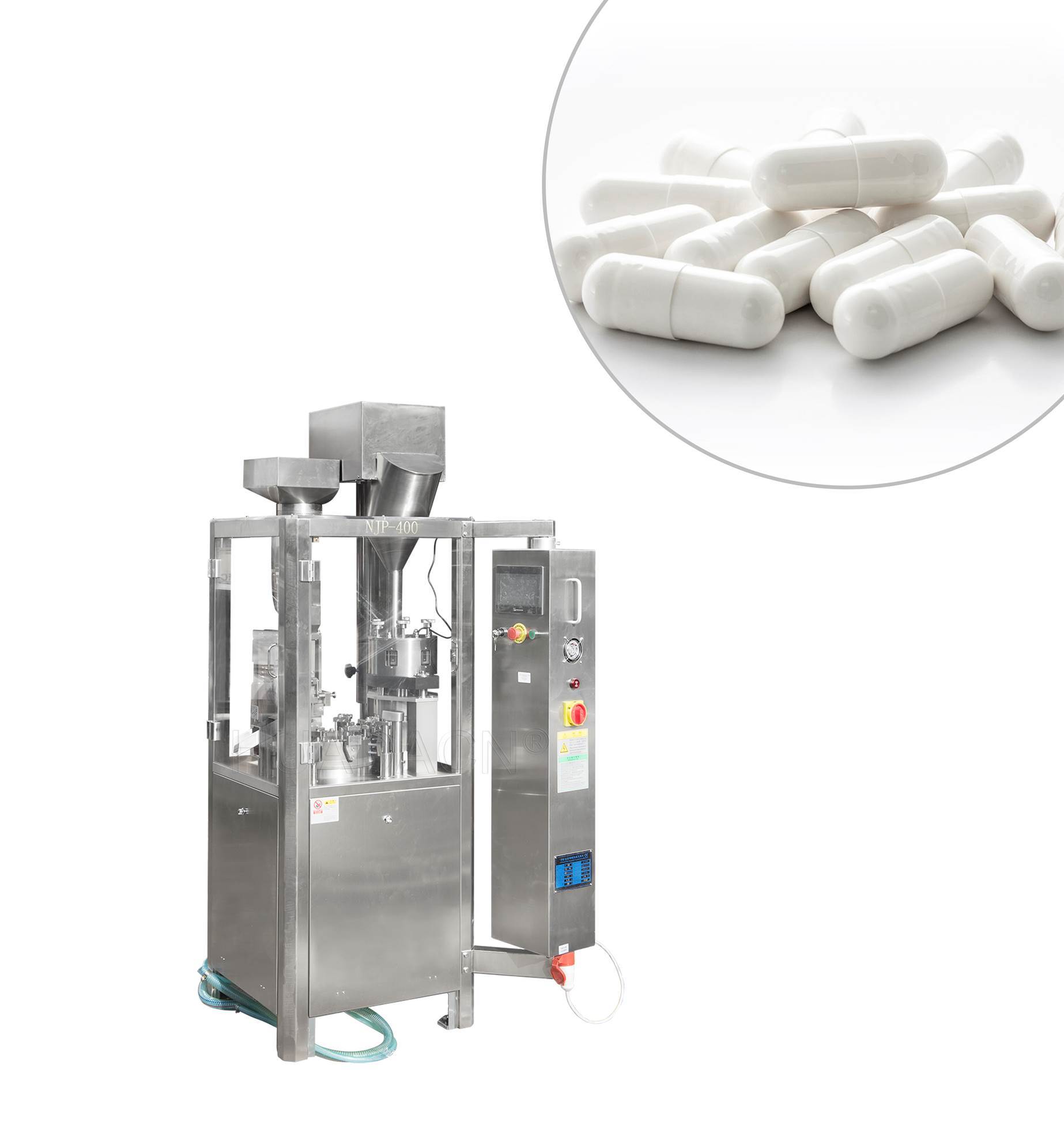
various types of capsules and tablets.

1. Observe the dissolution of cold water:

As the two capsules were placed in cold water at 25 degrees Celsius, and the gelatin capsules gradually enlarged and did not dissolve; the plant capsules gradually dissolved.

2. Observe the burning phenomenon:

As the two capsules are separately burned, the plant capsules produce the smell of burning cotton, and the gelatin capsules produce a smell of burning protein (similar to the smell of burning hair).

Precautions:

Do not touch the hand when using the burning method, pay attention to protect the eyes and skin to avoid splashing Mars.

What is tablet coating process?

Tablet coating is one of the commonly used pharmaceutical processes. This coating process can be applied by coating. The method can apply a substantially dry outer coating material to the surface of the dosage form to impart a particular benefit to the uncoated variety. It involves applying a sugar or polymer coating to the tablet.

Coating is an important part of the tablet production process. How to do the coating work directly affects the quality of the coated tablets.

Tablet coating process:

The auxiliary materials required for tablet coating are sucrose, talc, gelatin, and pigment. The amount of talc powder can reach more than 50% of the weight of the core.

There are six steps in general tablet coating:

1. In order to prevent the tablet core from being damaged due to the occurrence of rotten film during the rolling process of the sugar coating pan, thus the tablet quality affected, it is necessary to apply 2-3 layers of powder coating layer to increase core hardness and wear resistance.

2. The barrier layer prevents physical or chemical degradation of the active ingredient in the core by moisture attack.

3. The powder coating layer is rolled into a desired shape and size with 2% gelatin syrup and talc powder.

4. The sugar coating layer is a single syrup.

5. The colored layer uses colored syrup.

6. Finally, polish or wax is used to achieve a bright luster and prevent the ingress of humid air.

The tablet coating machine is a machine for uniformly coating and polishing the formed chips for the pharmaceutical industry, and can also be used for the candy mechanism pills or coatings in the food industry. The coated tablet has a bright and shiny surface, and the surface of the powdered sugar crystallizes to form a complete consolidated coating, which can also prevent the tablet chip from oxidative deterioration, moisture or volatilization, and can cover the chip to take discomfort. The taste is easy to identify and aid in the dissolution of the human stomach and in the stomach.

What are the differences between manual and automatic capsule filling, as well as various advantages and disadvantages?

Manual capsule filling machines are generally suitable for users with small capsules, such as homes and small clinics. The automatic filling machine has a high degree of automation and a relatively high cost, which is suitable for capsule production of large enterprises.

Unlike automatic filling machines, the powder of manual filling machines is manufactured in volume. This means that the entire capsule must be filled. Changes in API or final mixing density may make it impossible to fill the exact mixture. In the case of lower density, a manual compaction system can be used.

When using a manual capsule filling machine, attention must be paid to the formability of the filling powder, and a corresponding amount of powder can be manually placed in the capsule shell. If there is a filling capsule machine, if it is easy to form, a slight pressure can be applied to the corresponding filling rod of the root. Usually it is easy to fill.

Clearly, the main advantage of manually filling capsules is that the investment in equipment and format is much lower and the time for adjustment and cleaning related activities is greatly reduced. Another advantage of manual filling is the flexible volume, which makes it possible to package all powders, which is very useful for preparing very small batches in clinical trials or formulation tests.

Speed, reliability and ability to adjust doses are the main advantages of automated machines. The main drawbacks include the need to invest in expensive equipment and the time required to adjust the batch, which is more suitable for making larger batches than manual filling.

Capsule filling is a complex process, so there may be many challenges. It is important that the product to be packaged is well developed with acceptable flowability and repeatable batch-to-batch density to avoid problems with quality uniformity.

Reference: “Key Considerations in Capsule Filling,” Pharmaceutical Technology 41 (3) p. 30–34, 2017.

How does liquid capsule filling machine works?

As we can see, most capsules contain powder, yet there are also various liquid gel capsules in the market. So how to make a liquid gel capsule?

Here we are talking about is mechanical filling.

Here is a video that tells you how liquid capsule filling machine works.https://www.ipharmachine.com/liquid-capsule-filling-and-sealing-machine

According to the capsule filling production process, the capsule production operation can be divided into manual operation, semi-automatic operation, fully automatic gap operation and fully automatic continuous operation. In addition to manual operation, mechanical filling capsules can be divided into the following processes: plastic shell arrangement, calibration direction, plastic shell separation, drug filling, plastic shell closure and delivery.

The liquid capsule filling machine body is provided with a feeding mechanism, a liquid adding mechanism, a pressing mechanism, a bag discharging mechanism and a turntable mechanism, and the feeding mechanism. The liquid adding mechanism, the pressing mechanism and the bag discharging mechanism are rotationally connected by the turntable mechanism. The liquid adding mechanism includes a liquid adding cabinet, a liquid storage tank, a chestnut body, a piston rod and a rotating shaft. The filling cabinet is fixed on the body. The liquid storage tank and the chestnut body are fixed on the liquid filling cabinet. The chestnut body is placed vertically, and the piston rod and the rotating shaft are respectively disposed on the chestnut body from both axial ends. The inner end of the piston rod and the inner end of the rotating shaft extend into the body cavity of the chestnut, and the outer end of the piston rod is connected with a lifting drive mechanism for driving the lifting of the chestnut. The outer end of the rotating shaft is connected to a rotary drive mechanism that drives the reciprocating rotation of the chestnut. A liquid inlet interface and a liquid outlet interface are radially extended on the chestnut body, and the liquid inlet interface and the liquid outlet interface are connected with the chestnut body cavity, the liquid inlet interface is connected with the liquid storage tank, and the liquid supply interface is connected with the liquid addition output. The tube has a radial through hole in the inner end of the chestnut body cavity, and the radial through hole is sequentially switched and communicated with the liquid inlet interface and the liquid outlet interface as the rotary drive mechanism drives the rotary shaft to rotate back and forth.

What are separated capsule and joined capsule?

The joined capsule refers to a capsule of which the capsule body and the capsule cap are pre-locked, and all capsule manufacturers can supply joined capsules, and most of the filling machines on the market are applicable to joined capsules.

The separated capsule refers to a capsule of which the capsule body and the capsule cap are separated. CapsulCN is the first manufacturer to offer separated capsule, and now many other manufacturers also have separated capsules.

Which type of capsule should I choose?

You’d better choose your capsule type according to the filling method you choose.

  • If you want to fill it manually, separated capsule is more convenient than the joined capsule, because you don’t need to separate the cap and body of the capsule before filling.
  • If you are going to use the manual capsule filler, separated capsule has more choices than the joined capsule. Some manual capsule fillers can only be filled with separated capsule, not the joined capsule, and these manual capsule fillers are much cheaper than the one can fill joined capsule.
  • If you are going to use an automatic capsule machine, then you’d better choose joined capsules, because almost all machines on the market are designed according to joined capsules.

You could find out more contents about filling of these two capsules in the Capsule Filler Selection Guide – How to fill the capsule with powder.

More informtion about capsules, please visit our website: www.capsulcn.com

Empty Capsules

Empty capsules are made from a variety of different materials. For example, gelatin capsules are composed of a cap and a body capsule made of medicinal gelatin plus auxiliary materials. The capsule is mainly used for holding solid drugs, and can be used for self-made powders, health products, medicines, etc., and solves the problem of difficult entrance and poor mouthfeel for the user, greatly reducing the bitterness of the user when taking the powder. . Today’s hollow capsules are becoming more and more popular for a variety of reasons. First of all, the shape of the capsule is slender and easy to swallow. It is the most popular dosage form for consumers; in addition, it can effectively mask the unpleasant taste and smell of the built-in powder. Capsules come in a variety of sizes, including length 00 and capsule size 5. In addition, the capsules can be printed with text, logos and graphics to create a unique custom look.